Cottage Kitchen Renovation on a Budget: 7 Cost-Saving Choices That Still Look Rustic
The kitchen swallows more of a cottage renovation budget than any other room, yet it is also the room where rustic character can save you from expensive mistakes. A cottage kitchen does not need commercial-grade appliances, quartz waterfall islands, or custom cabinetry to feel welcoming. It needs honest materials, a little age, and choices that make daily life easier. The trick is knowing which corners are safe to cut and which ones will come back to haunt you.
If you are planning a cottage kitchen renovation on a budget, start with this rule: spend money on function, save money on finish. Plumbing, electrical, and a dependable stove are worth the investment. Decorative trim, cabinet fronts, and trendy tile are not. The seven choices below can keep costs down while making the finished kitchen look collected, warm, and unmistakably rustic.
1. Keep and Refresh Existing Cabinets Instead of Replacing Them
New cabinets can eat 30 to 50 percent of a kitchen budget before you even choose a countertop. In an older cottage, the existing cabinet boxes are often solid wood, built in place, and perfectly sized for the room. If the boxes are level and the doors still close, keep them. A thorough cleaning, light sanding, and a coat of cottage-friendly paint can make them look intentional rather than tired.
Choose colors that suit a rustic palette: creamy off-white, sage green, soft gray-blue, or deep putty. Swap dated handles for simple iron pulls, wooden knobs, or antique-style latches. If some upper doors are warped or missing, remove them and turn those cabinets into open shelves. You gain display space for crockery and lose the cost of new doors. For example, a small cottage kitchen might spend $600 on paint, primer, and hardware instead of $6,000 on new cabinetry. That is a huge saving that still looks authentic.
2. Use Painted Beadboard or Tongue-and-Groove as a Backsplash
Tile can be beautiful, but handmade ceramic, marble, and zellige add up quickly once you include adhesive, grout, trim, and labor. Painted beadboard or tongue-and-groove paneling costs a fraction of the price and looks right at home in a cottage. It softens the wall, adds vertical texture, and can be installed by a confident DIYer with a miter saw and a nail gun.
Use beadboard behind the sink, along an open wall, or under upper cabinets. Keep a fire-resistant material such as metal, glass, or ceramic tile directly behind the range if local codes require it. Paint the paneling the same color as the cabinets for a calm, seamless look, or use a crisp white to brighten a dark corner. A beadboard backsplash for a small kitchen might cost $150 to $300 in materials, while tile could easily run $1,000 or more.
3. Choose Open Shelving and Reclaimed Wood Over Upper Cabinets
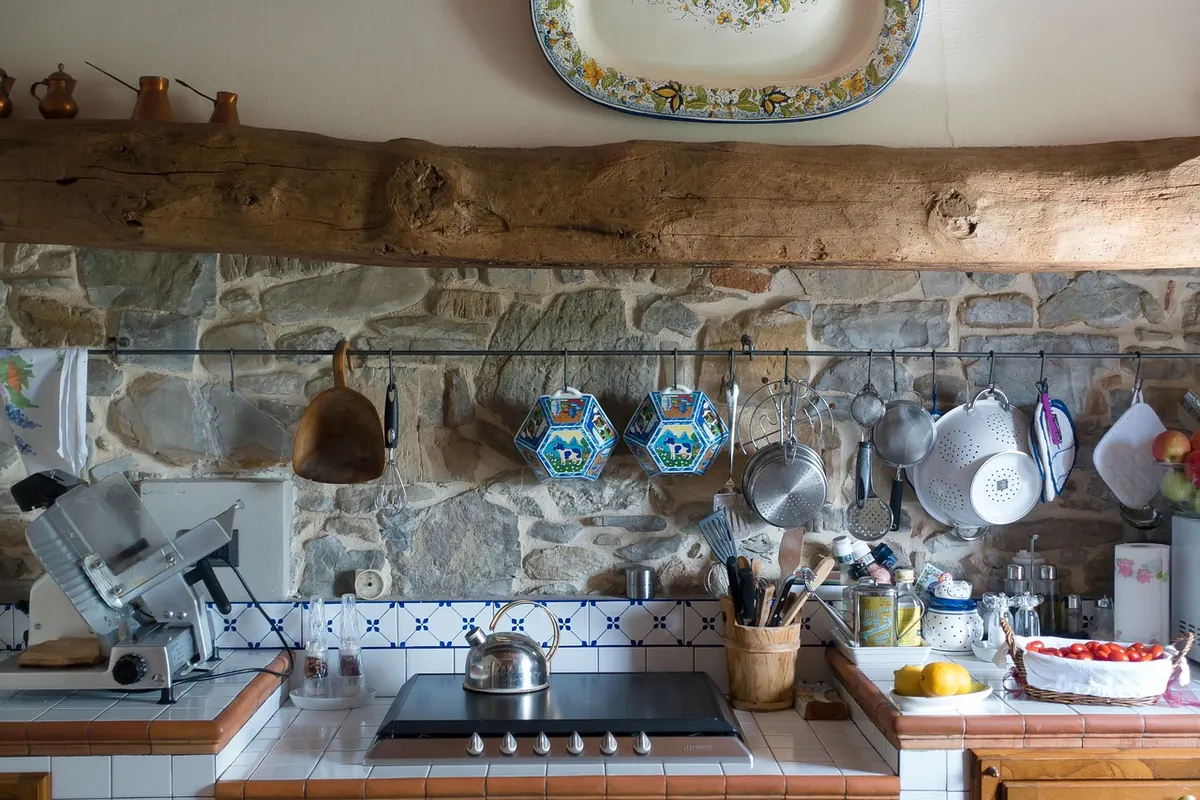
Upper cabinets are expensive, and in a cottage they can make a small kitchen feel closed in. Open shelves are cheaper to build, easier to install, and they invite you to display everyday bowls, jars, and enamelware. Use reclaimed barn wood, old floorboards, or simple pine boards stained to look aged. Heavy iron brackets add rustic character and cost far less than a custom cabinet run.
Open shelving is not an excuse for clutter. Keep it edited: a stack of plates, a few mugs, a bowl of lemons, and one or two heirlooms. If you need hidden storage, combine open shelves on one wall with closed cabinets or a freestanding dresser on another. A vintage armoire or a painted hutch can hold pantry items and cost less than built-ins. For example, a $120 reclaimed plank shelf with $40 brackets can replace an upper cabinet that would have cost $500 or more.
4. Use Butcher Block or Soapstone Remnants Instead of High-End Stone
Granite, quartz, and marble can blow a budget fast, especially if you choose a rare slab or a complicated edge profile. Butcher block is warm, affordable, and forgiving in a cottage kitchen. It can be sanded and oiled when it gets scratched, and it looks better with age. Soapstone remnants are another option: quiet, matte, and naturally rustic. Ask local fabricators about offcuts and remnant pieces, which are often sold at a steep discount.
If you cook a lot, use butcher block on an island or perimeter counter and keep a small piece of stone near the sink if you worry about water. Seal butcher block regularly with food-safe oil or a hard-wax finish. Avoid installing it directly beside a dishwasher without extra sealing, since steam and moisture can damage the wood. A butcher block counter for a small cottage kitchen might cost $400 to $900, while quartz could cost $2,000 to $4,000 installed.
5. Keep the Sink Location and Splurge Only on the Faucet
Moving a sink means moving plumbing, cutting cabinets, patching floors, and paying for permits. It is rarely worth it in a budget renovation. Keep the sink where it is, especially if it sits under a window with a view of the garden. Instead, update the faucet. A well-chosen bridge faucet, gooseneck faucet, or vintage-style tap can make the whole sink area feel new.
If the existing sink is a chipped enamel basin, you have options. A salvage yard sink with character can cost less than a new farmhouse sink, and a new apron-front sink may be worth the splurge if you wash a lot of dishes. Just remember that farmhouse sinks often require custom cabinet modifications, which adds labor. A $250 faucet and a $100 salvage sink can deliver more cottage charm than a $1,500 designer sink with a basic tap.
6. Choose Vinyl, Linoleum, or Laminate Look-Alikes Over Real Stone Floors
Real stone and handmade tile floors are beautiful, but they are heavy, expensive, and demanding to install. For a cottage kitchen on a budget, consider sheet vinyl, linoleum, or luxury vinyl plank in a wood or checkerboard pattern. Modern vinyl can mimic old pine, worn slate, or classic black-and-white tile convincingly. Linoleum is made from natural materials, wears well, and has a soft, vintage look that suits cottages.
If you want a truly rustic floor, look for unfinished pine boards or reclaimed wide-plank wood. They are affordable if you can source them locally, but they need sealing and may show dents. A practical compromise is a wood-look vinyl plank in a warm honey tone, installed as a floating floor over a level subfloor. For a small kitchen, this might cost $300 to $700 in materials, compared with $2,000 or more for stone tile.
7. Shop Architectural Salvage for Lighting, Hardware, and Details
Rustic charm lives in the details: an old glass knob, a battered brass hook, a milk-glass pendant, a chippy wooden shelf. Architectural salvage yards, flea markets, estate sales, and online marketplaces are full of these small treasures at low prices. You can mix salvaged pieces with inexpensive new fixtures to create a collected look that does not feel staged.
Be careful with old electrical fixtures. Have a licensed electrician inspect and rewire anything that will be connected to your home's wiring. For hardware, old hinges, latches, and drawer pulls are usually safe to reuse after a good cleaning. If you cannot find enough matching knobs, embrace the mismatch. A cottage kitchen can carry a mix of black iron, white ceramic, and worn brass as long as the scale is consistent. A salvaged pendant might cost $40, while a new designer version could cost $300 or more.
Where to Splurge in a Cottage Kitchen
A budget renovation is not about spending nothing. It is about spending deliberately. In a cottage kitchen, these are the places where extra money tends to pay off:
- The stove or range: If you cook daily, a reliable range is worth the investment. A vintage-style range can also become the room's focal point.
- The faucet: You touch it every day, and a quality faucet prevents leaks and frustration.
- Electrical and plumbing work: Hidden work is not glamorous, but it keeps the kitchen safe and functional.
- One statement light: A single beautiful pendant or chandelier can carry the whole rustic look.
- Good paint and primer: Cheap paint can peel or yellow. A durable finish keeps the refresh looking fresh.
Save on decorative tile, cabinet doors, floor coverings, and accessories. Those are easy to change later, and they are where a budget can quietly disappear.
A Realistic Budget Breakdown for a Small Cottage Kitchen
Every kitchen is different, but a small cottage kitchen refresh can often be done for $5,000 to $15,000 if you keep the layout and do some work yourself. Here is a rough percentage guide to help you plan:
- Cabinets: 15 to 20 percent for paint, hardware, and minor repairs.
- Countertops: 10 to 15 percent for butcher block, remnant stone, or laminate.
- Backsplash: 5 to 8 percent for beadboard, paint, or a small tile area.
- Flooring: 10 to 15 percent for vinyl, linoleum, or reclaimed wood.
- Appliances: 15 to 20 percent, more if you need a new range or refrigerator.
- Lighting and hardware: 8 to 10 percent, especially if you shop salvage.
- Labor, permits, and trades: 20 to
Photo: stux / Pixabay