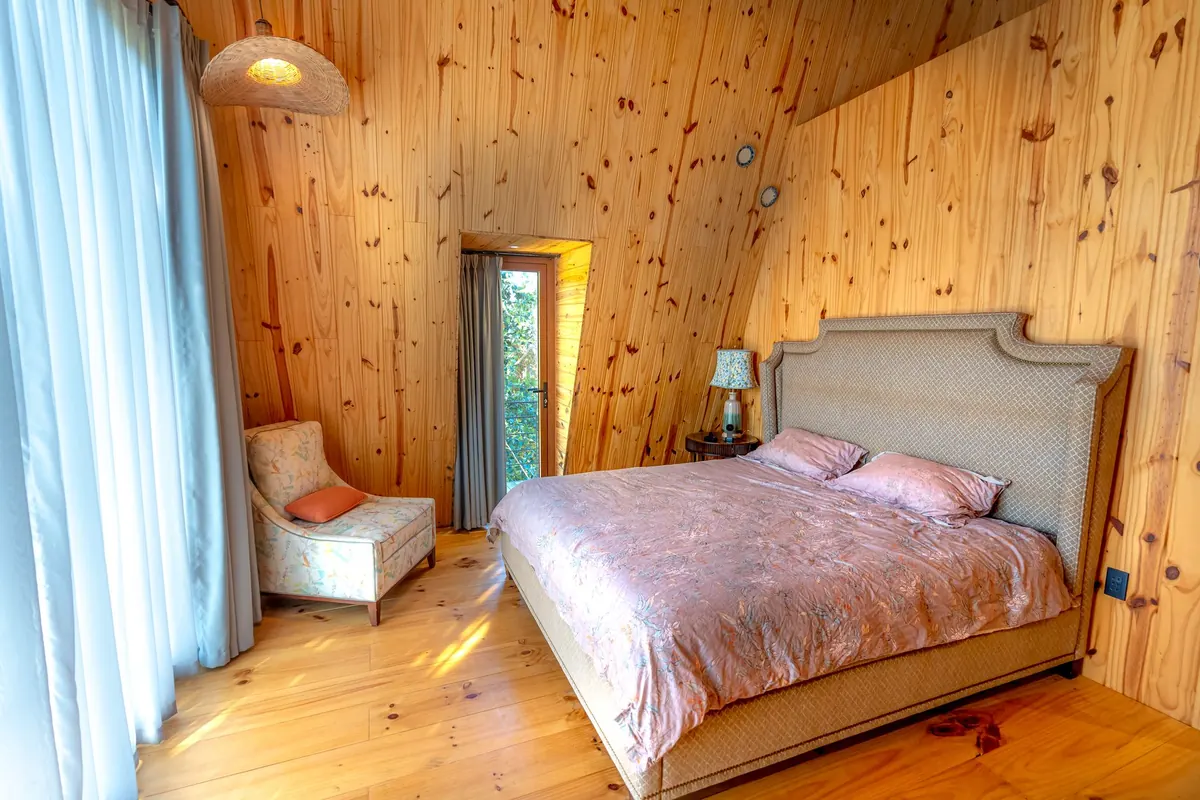
Most cottage bedrooms are not designed so much as accumulated. A quilt found at a church sale, a lamp that came from a grandmother's spare room, sheets that finally went soft after a hundred washes — that's usually how the good ones come together. Which is worth remembering before you order anything new. A bedroom can feel genuinely inviting without a renovation or a big budget; it needs layers, two or three warm light sources, and a willingness to mix secondhand pieces with plain modern basics. The trick is making the mix look deliberate rather than accidental.
Start With the Bed, Then Work Outward
The bed takes up more visual space than everything else in the room combined, so it sets the mood. Begin with the bottom layer and keep it quiet: a white or oatmeal fitted sheet, then a duvet cover in washed linen or cotton percale. Neutral doesn't mean boring here. It means the textures and the old pieces have something calm to sit against.
From there, work outward rather than upward. Add a coverlet or quilt folded across the lower third of the bed, not hauled up over the pillows. A single folded blanket at the foot reads calmer than a full second duvet. If the room is small, this is also where you decide what to leave off. A bed that looks comfortable is not the same as a bed buried in fabric.
Layer Texture, Not Just Color
Cozy is a texture word, not a color word. A room can be all cream and still feel flat if everything in it is smooth. Aim for three distinct surfaces visible from the doorway — something washed and rumpled, something with weight, something with a little shine or loft.
A simple order to build in:
- Smooth base. Cotton percale or sateen sheets, ironed or not.
- Rumpled middle. A washed-linen duvet cover, which creases in a way that looks relaxed rather than untidy.
- Weight on top. A cotton quilt, a wool camp blanket, or a knit throw with visible stitches.
- One soft accent. A small chenille cushion, or a crocheted coverlet over the back of a chair.
Two textures is fine. Five is a pile. If you can't tell from across the room what's wool and what's linen, add one more thing; if you can't see the bed for the bedding, take one away. For pillows, two sleeping pillows, two shams, and one small accent is usually enough — an odd number reads better than an even one.
Three Light Sources, All of Them Warm
Overhead light alone flattens a bedroom. It also tends to be the wrong color — cool white bulbs that make old wood look gray and everyone in the room look tired. Aim for three points of light at three different heights: a bedside lamp, a smaller lamp on the dresser, and something low near a chair or a plug-in wall sconce.
Bulbs, dimmers, and cords
Look for bulbs marked 2700K, which sits at the warm end of the everyday household range; anything above 3000K starts to feel like an office. Put the bedside lamp on a dimmer if you can. A plug-in dimmer switch costs little and changes how the room feels at night more than any new fixture will. Hide cords with a fabric sleeve or run them along the baseboard rather than across the floor. And if you're using a genuinely old lamp, have the wiring checked or rewired before it goes on your nightstand — that's a small job for an electrician and not something to guess at.
Vintage Finds That Earn Their Place
Secondhand pieces give a cottage bedroom its history, but only the right ones. The test is simple: can you use it, or do you genuinely love looking at it? If neither, it becomes clutter with a story attached.
Things that tend to work hard in a bedroom:
- An ironstone or enamel pitcher, for water or for holding dried stems.
- Small brass or painted candlesticks, which add height on a nightstand without competing with a lamp.
- A wooden bowl or tray to corral keys, glasses, and the book you're halfway through.
- Framed botanicals, seed packets, or old maps. Small art is easier to place than large, and cheaper to find.
- A crock or basket for the corner, holding spare blankets and looking better than an open shelf.
- A mirror with a worn frame, ideally opposite a window to double the daylight.
Where to look: estate sales on the final afternoon, charity shops in smaller towns, online marketplaces with a saved search running, and auction box lots. Check for chips, loose joints, and woodworm — small holes with a fine dust beneath them. Skip any textile that smells of smoke or damp; that smell rarely leaves, no matter how many times you wash it.
Mix Old and New So It Doesn't Feel Like a Museum
The mistake with vintage is doing too much of it. A room where everything is floral, crocheted, and mid-century can read as a display case rather than somewhere you'd actually sleep. Keep the new, plain things as a counterweight: white sheets, a simple linen shade, a flat wool rug.
A workable ratio is one old piece to every two or three plain ones. One pattern per surface — a striped quilt on the bed, a floral cushion on the chair, nothing competing directly. Leave at least a third of every flat surface empty, even if that means the dresser holds only a lamp, a small dish for earrings, and one framed picture.
Where to Put Things in a Small Room
Cottage bedrooms are often short on closets. A few honest fixes: a bench or trunk at the foot of the bed, a slim ladder for throws, hooks on the back of the door for robes and tomorrow's clothes, and a basket beside the bed for the book-and-glasses situation that otherwise spreads across the nightstand. If you have a spare stretch of wall, a shallow shelf at picture height holds a row of small vintage pieces and keeps the dresser clear for the things you use daily.
Start With What You Own
You don't need to buy anything to begin. Tonight: swap one cool bulb for a 2700K one, carry a lamp in from the living room, and pull a wool blanket out of the closet and fold it at the foot of the bed. Live with it for a week before you shop. The layers you notice and miss are the ones worth adding, and the ones you keep rearranging were probably never needed.
After that, add one thing at a time — ideally one old piece and one plain one — and let the room settle in between. A cozy bedroom is rarely finished, which is a large part of its appeal.
Photo: Quang Nguyen Vinh / Pexels